
Designed to Succeed

A framework and operating model for chapter-based learning

Global Ready Network (GRN) is built to turn chapter-based learning into a system that can actually run. Its framework defines the four layers that make it work, and its operating model turns those layers into a practical rhythm of study, practice, feedback, mentor review, and wider participation.
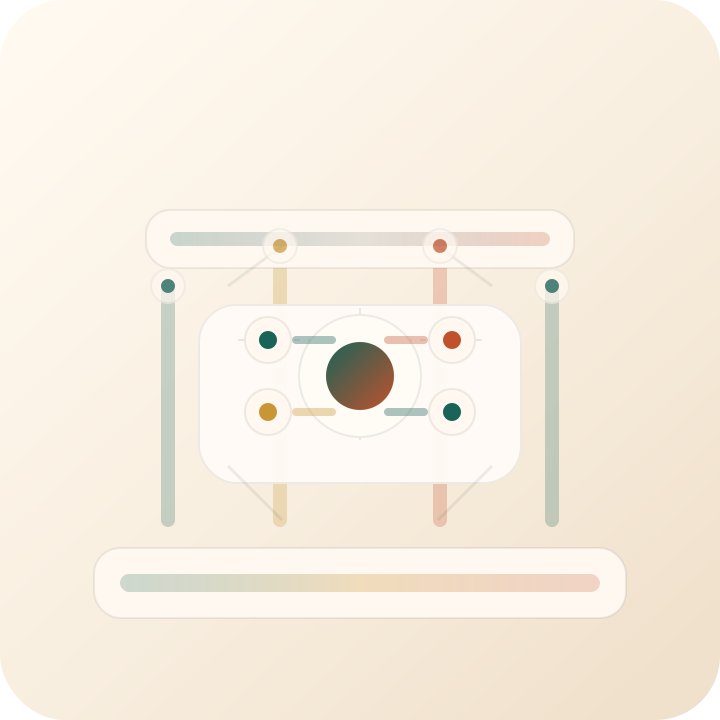
Framework

The four layers that make the model work

Each layer solves a different problem. Together they create a model that is understandable, repeatable, and able to grow without losing its human core.

Chapter

The chapter is the learning unit

Human skills are learned best in groups. A chapter is the smallest organized unit in the system: a committed group pursuing a specific learning track together.

That gives practice a real home, with shared rhythm, belonging, accountability, and visible growth.

Logistics

Logistics make the chapter operable

Operations can be self-managed by the local group or supported by schools, colleges, universities, and similar partners.

The goal is straightforward: a reliable place, rhythm, and coordination model that keeps the chapter running.

Support

Support systems improve the learning

Human mentors and AI-assisted tools augment one another. Mentors add perspective, encouragement, and judgment.

Privacy-aware personalized feedback loops keep practice going between sessions and can build confidence, especially for participants who are shy or not yet comfortable speaking up.

Network

The network expands what becomes possible

The network creates exposure, introductions, and open access to people, ideas, pathways, and opportunities.

It helps each chapter connect learners to a wider world that the local room cannot unlock on its own.

Operating model

How the model runs in practice

The framework becomes operational when central design, local chapter leadership, self-study, feedback, mentor review, and network participation all have a clear place in the cycle.

Central design GRN Track Team

Educators, researchers, experts, and technologists design the track, study guides, materials, tools, and AI-supported feedback systems that personalize and accelerate learning.

Local support Area Leads

Area Leads support multiple chapters, coordinate with mentors, and help local teams keep operations healthy and aligned.

1

Run the chapter meetup

Each chapter typically serves 10 to 30 learners and is run by a Chapter Coordinator with an Assistant Coordinator who keep the meetup rhythm inclusive, comfortable, and on track.

2

Practice together

Sessions center on group activities such as discussion, speaking, collaboration, peer response, and role-based participation.

3

Continue self-study

Learners continue at their own pace between meetups so they can catch up, go beyond the group, and build confidence privately.

4

Use the AI feedback loop

AI-supported tools give quick, personalized feedback as many times as needed before work is escalated for human review.

5

Escalate to mentors and the network

At defined intervals, learners meet mentors individually or in groups and join virtual, onsite, and networking events that expand access.

Each chapter is semi-autonomous in local delivery, but it stays aligned to a shared GRN structure, learner standards, and operating rhythm.

Operating roles

Who keeps the system running

Different layers of responsibility keep the model both structured and locally adaptable.

  • GRN Track Team: educators, researchers, experts, and technologists design the learning track, shared tools, and AI-supported learning systems.
  • Area Leads: oversee multiple chapters and provide operating guidance.
  • Chapter Coordinators: each chapter has a Coordinator and Assistant Coordinator who run local meetups and protect chapter culture.
  • Leadership rotation: the coordinator role can rotate over time so the chapter also becomes a place to practice leadership.
  • Mentors: provide scheduled human review, guidance, and encouragement.
Learner experience

What participation looks like

The learner journey moves between shared chapter practice and individual progress outside the room.

  • Attend recurring chapter meetups tied to the track outline.
  • Take part in group activities rather than only consuming content.
  • Continue self-study outside the meetup at an individual pace.
  • Use the AI loop repeatedly for rehearsal, iteration, and confidence-building.
  • Move to mentor review and wider GRN events when ready or when the track requires it.

See the model in action

If you want to host a chapter, support the system, or understand where the first pilot begins, the next steps are straightforward.